Birth Month Flowers: The Full List, and What Works in South Africa
In this article
Every month has a flower attached to it, the way every month has a birthstone. It is a genuinely lovely idea for a birthday gift — until you look up March, find a daffodil, and remember that March in South Africa is autumn. Daffodils do grow here — they just flower from June to September, and in March the bulbs are still dormant underground.
Here is the full list of birth month flowers, and what each one actually is. Then the honest answer to the question that follows: can you get it in Cape Town that month, and if not, what should you send instead?
The list was written for a Northern spring. We live six months out of step with it — which turns out to be more interesting than inconvenient.
Where Birth Flowers Come From
Nobody sat down and invented this. The Old Farmer's Almanac puts it plainly: “Birth flowers have been around for many generations, similar to birthstones. The flower designated each month is usually tied to the season when it blooms; many flowers also have cultural or religious associations from ancient times.”
That first clause is the whole story of this article. The flower is tied to the season when it blooms — and the seasons in question are Northern Hemisphere ones. A tradition assembled in Europe and North America, where March means the first daffodils pushing through cold ground, transplants awkwardly to a country where March means the end of a long dry summer.
The Almanac is also candid about why the lists wobble: not all cultures agree on which flower belongs to which month, and, in its words, “some flowers simply aren't as available in different regions.” Which is a polite way of describing the problem South Africans have with the whole calendar.
All Twelve, Month by Month
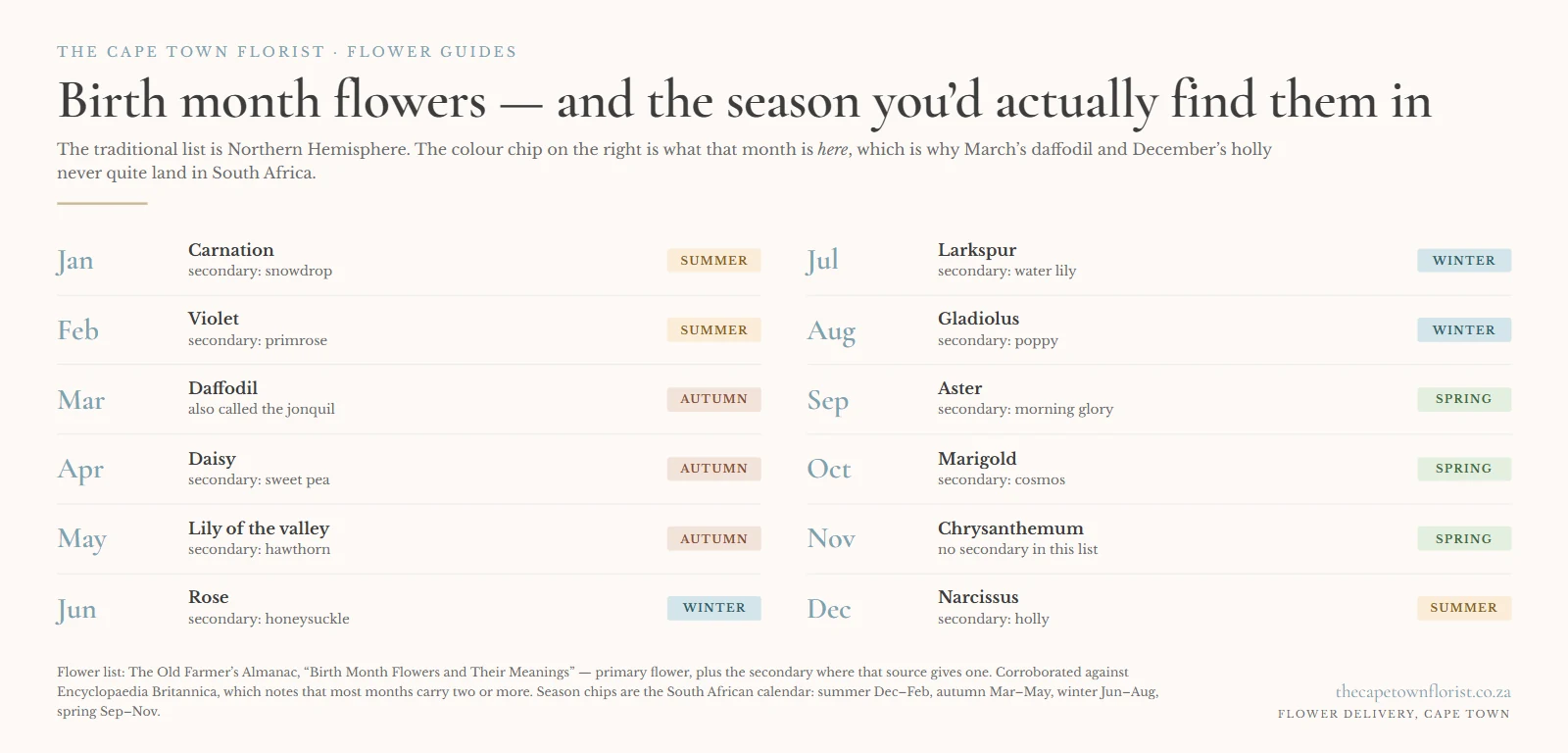
Primary flower first, secondary after, following the Almanac. The note underneath each is the practical bit: whether a florist in Cape Town can realistically put it in a vase for you that month.
January — Carnation (and snowdrop)
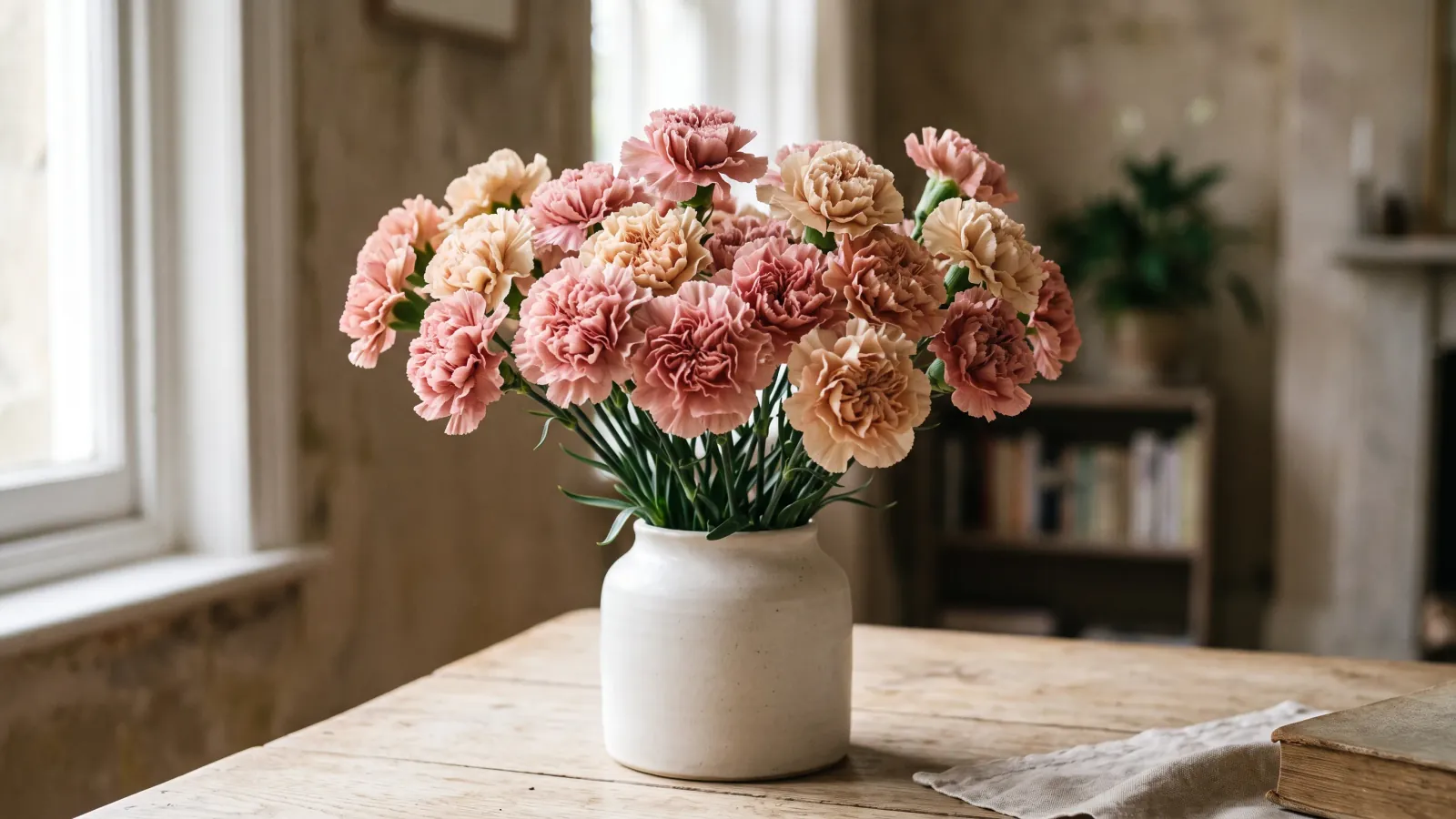
A summer birthday here. Carnations are one of the genuine year-round staples of the cut-flower trade, so a January birthday is one of the easy ones. The snowdrop is a European woodland bulb that flowers in late winter snow; treat it as decorative trivia rather than a shopping list.
February — Violet (and primrose)
Still high summer. Neither violets nor primroses are commercial cut flowers in South Africa — they are small, short-stemmed garden plants. If you want to honour February properly, look for something in the same deep purple register rather than the flower itself.
March — Daffodil (the Almanac's second flower, the jonquil, is a type of daffodil)
The most awkward month on the list, and the most interesting. The daffodil is the Northern Hemisphere's announcement that winter is ending. March here is the far end of summer. But South Africa has its own March flower, and it is a good one — see below.
April — Daisy (and sweet pea)
Another month the calendar gets right. Gerbera daisies are a florist staple all year, they come in every colour a birthday could want, and they are cheerful without being fussy. Our gerbera daisy bouquets are the direct answer to an April birthday.
May — Lily of the valley (and hawthorn)
Lily of the valley is a cool-climate woodland plant, famously expensive and famously brief even where it does grow. It is not a South African cut flower. Worth knowing so you are not disappointed hunting for it.
June — Rose (and honeysuckle)
The gift the calendar hands you. Roses are available every week of the year and every colour means something slightly different, which our guide to what each bloom actually says in South Africa covers properly. A June birthday is the one month where the traditional answer and the practical answer are the same. Browse the rose bouquets.
July — Larkspur (and water lily)
Larkspur is a tall spired annual that is uncommon in the local trade. The secondary is more promising: the water lily is not a florist flower either, but it points you toward lilies generally, which are stocked all year. If a July birthday is coming, our guide to the different types of lilies sold in South Africa explains which is which.
August — Gladiolus (and poppy)
This is the one that belongs to us, and it is worth the detour — see the next section.
September — Aster (and morning glory)
Early spring here, and the best month in the Cape flower calendar by some distance. September is the month to ignore the list entirely and send something indigenous.
October — Marigold (and cosmos)
Mid-spring. Marigolds are mostly a bedding plant rather than a cut flower in South Africa. Cosmos is a familiar sight on South African roadsides, but again as a wild and garden flower rather than something a florist stocks.
November — Chrysanthemum
The only month the Almanac gives a single flower to, and a genuinely practical one. Chrysanthemums are a cut-flower workhorse: widely available, long-lasting in a vase, and available in enough colours to suit almost anyone.
December — Narcissus (and holly)
The most Northern-Hemisphere entry of the twelve. Holly is a midwinter plant carrying midwinter symbolism, arriving in a month that here means beaches and high-summer heat. A December birthday is better served by what is actually in season.


Why the List Runs Upside Down Here
Six of the flowers on the list are about the ending of a cold winter: snowdrops, primroses, daffodils, lily of the valley, hawthorn and holly. That meaning does not survive the journey: our winter ends in August, with the West Coast turning into a carpet of wildflowers instead.
August's gladiolus is, in the deepest sense, a local
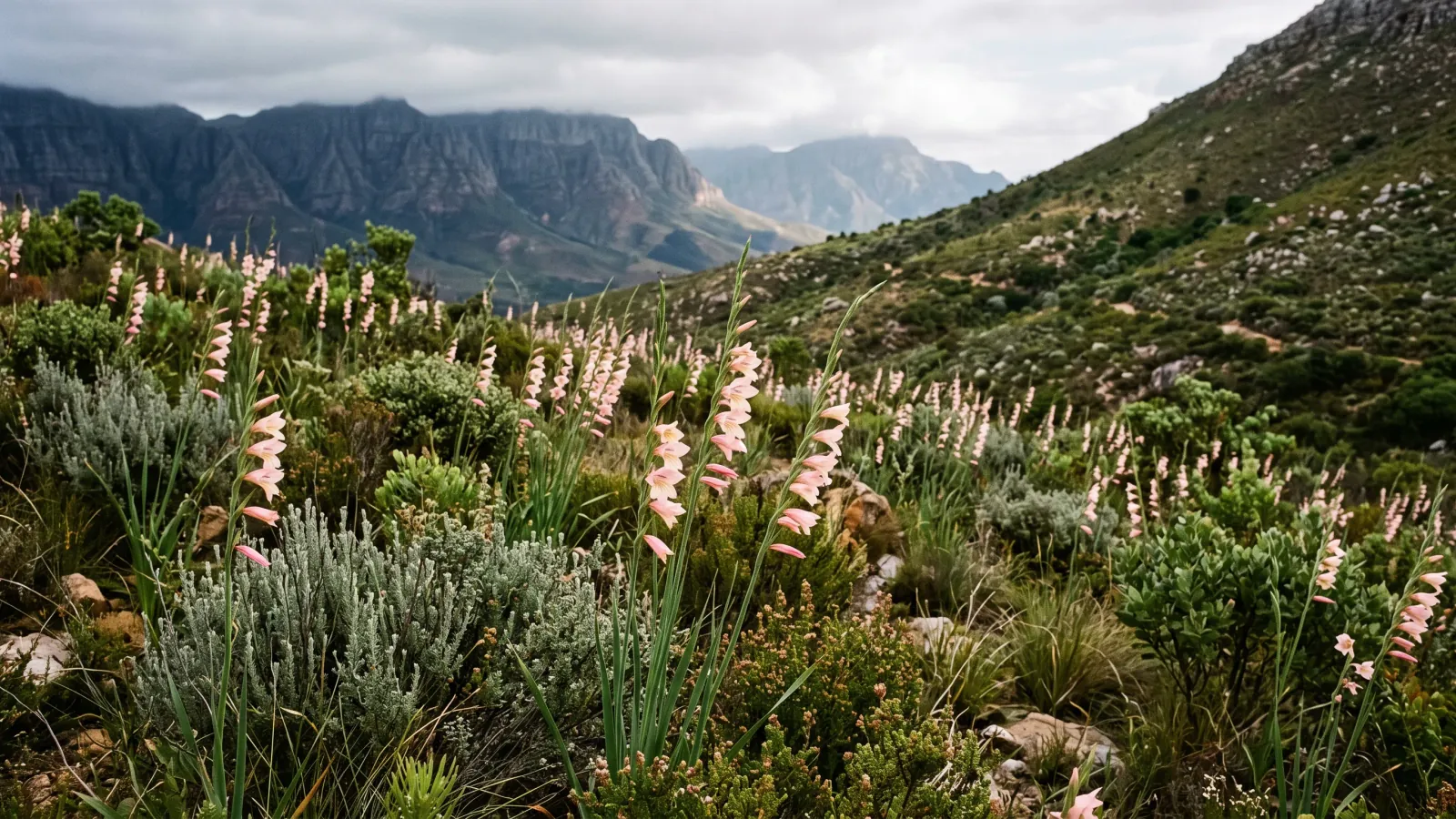
Here is the fact that reframes the whole list. SANBI's PlantZAfrica records that “the genus Gladiolus has about 250 species and is native to tropical and southern Africa, Madagascar, the Middle East, Mediterranean Europe and Asia Minor”. Then comes the line that matters: “its major centre of diversity is in the southwestern Cape, in the geographical epicentre of the winter rainfall zone, which contains a very high number of endemic species.”
The August birth flower's global heartland is this corner of the country. The gladiolus in a florist's bucket is of course a bred hybrid. SANBI notes of one of the African species that “cultivars developed in Europe in the early 1900s are grown worldwide and have become very successful cut-flowers”. But the wild ancestors are on the mountainsides above the city.
And March has a better answer than the daffodil
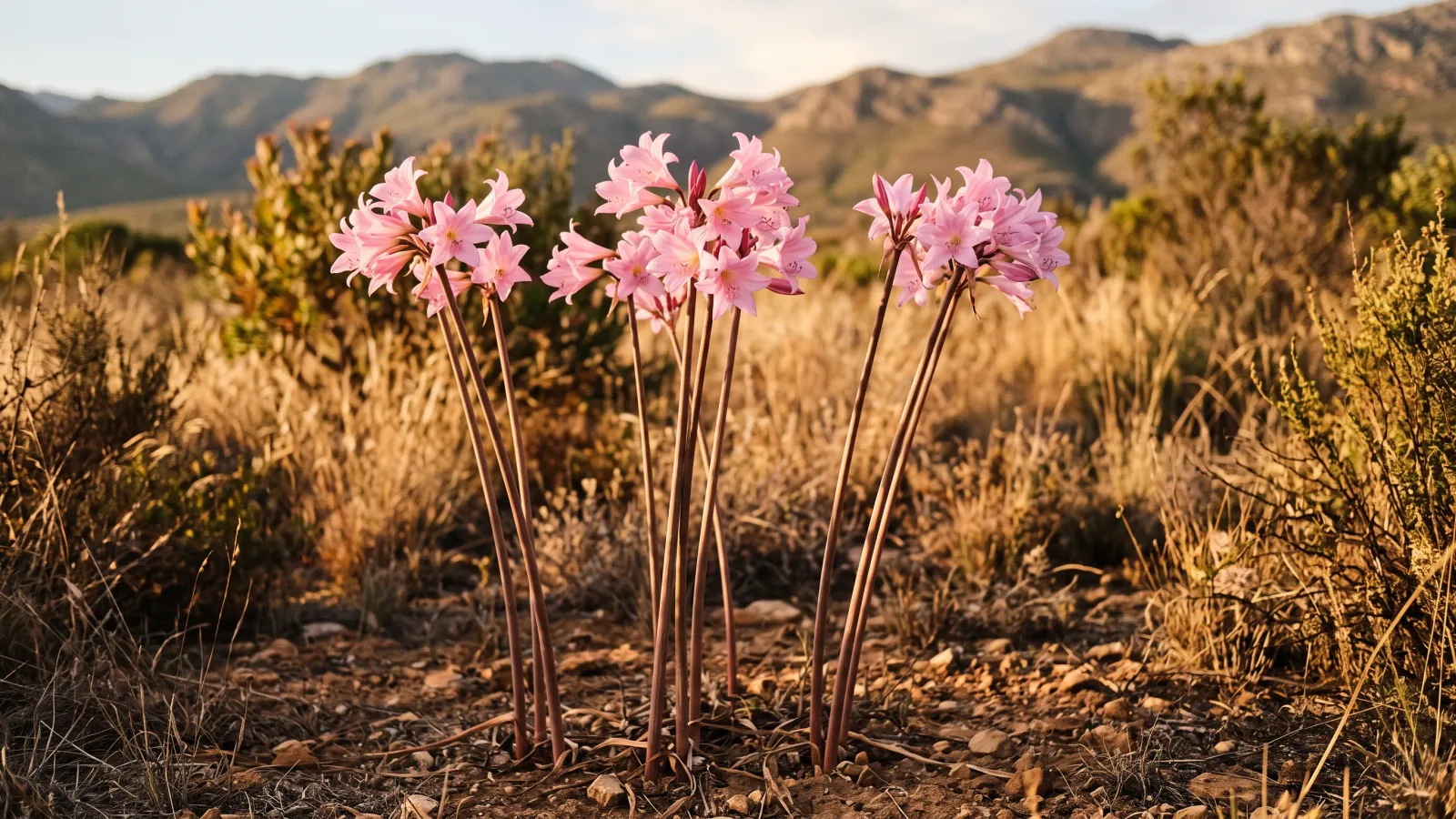
If the daffodil is the Northern Hemisphere's March flower because it opens as their spring begins, then South Africa's March flower should be whatever opens as our autumn begins. It exists, and it is even called the March lily.
SANBI records Amaryllis belladonna as the “belladonna lily, March lily, naked lady” in English and “Maartblom, Maartlelie, belladonnalelie” in Afrikaans. It “grows in the South Western Cape”, and its flowering time is given precisely: “late summer, February and March”. Tall bare stems, no leaves, pink trumpets appearing straight out of dry ground at the end of summer — hence “naked lady”.
September and October, look past the list
Spring here is the showiest stretch of the year, and none of it is on the traditional calendar. If the birthday falls between September and November, the better gift is whatever is genuinely at its peak — our month-by-month guide to what is in season in Cape Town lays out exactly what that is, week by week.
Using a Birth Flower for an Actual Birthday
The tradition is charming, and it is also a shortcut past the hardest part of buying flowers, which is deciding. Four ways to use it without ending up disappointed.
Use it as a colour brief, not a shopping list
Six of the twelve are not commercially available here. But every one of them has a colour and a character — February's deep violet, October's hot marigold orange, May's small white bells. Take that to a florist as a brief and you will get something in the spirit of the month that is also fresh this week.
Say what it is on the card
The gift only lands if the recipient knows. “Chrysanthemums, because you're a November” does more work than the flowers alone. This is the entire value of the tradition — it turns an ordinary bouquet into something chosen.
Where the month is impossible, go local
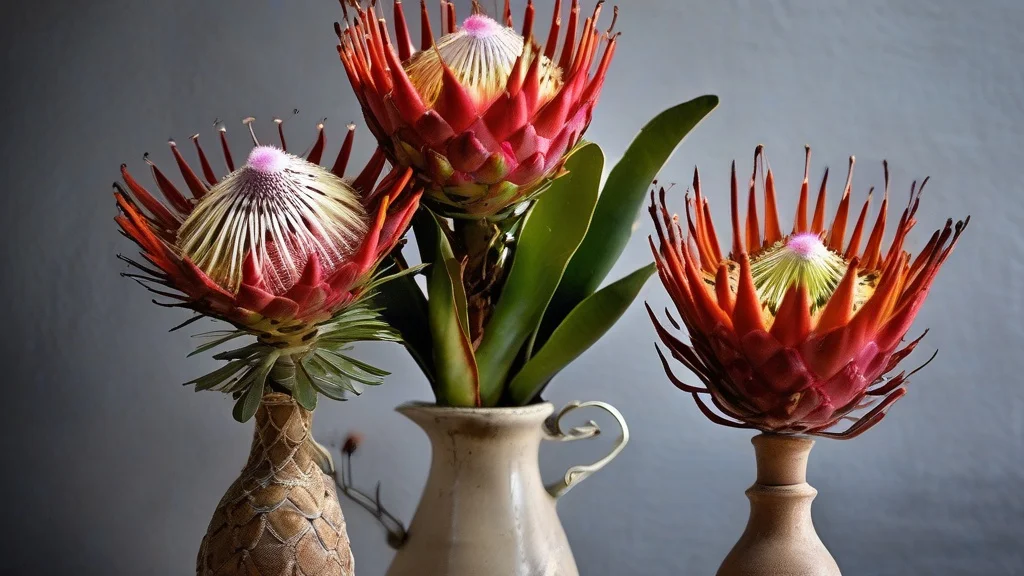
A daffodil in March is not happening. A protea in March is, and it says something a daffodil never could about where the gift came from. Nobody has ever been disappointed to receive a King Protea.
Check what it costs before you commit
Birth-flower gifting does not need to be expensive. Gerberas, chrysanthemums and carnations — three of the twelve, and three of the most available — sit at the affordable end. Our bouquets under R300 and arrangements under R500 cover most of the practical months on this list.


Birth Flower FAQs
What is my birth flower?
Find your birth month in the chart above. January is the carnation, February the violet, March the daffodil, April the daisy, May lily of the valley, June the rose, July larkspur, August the gladiolus, September the aster, October the marigold, November the chrysanthemum and December the narcissus.
Why do some months have two birth flowers?
Because the tradition was never standardised. Britannica notes that “most months have two (or more) birth month flowers”, and the Almanac lists a primary plus a secondary where one exists. The primaries are consistent between sources; the secondaries move around.
Do birth flowers work in South Africa?
Half of them do. The list is tied to Northern Hemisphere bloom times, so our seasons run six months out of step — March's daffodil arrives in our autumn and December's holly in high summer. Carnations, daisies, roses and chrysanthemums are stocked here year-round and work without adjustment.
Is the gladiolus really a South African flower?
The genus is. SANBI states that Gladiolus “has about 250 species and is native to tropical and southern Africa”, and that “its major centre of diversity is in the southwestern Cape”. The florist's gladiolus is a European-bred hybrid, but its wild relatives grow on the mountains around Cape Town.
What is South Africa's own March flower?
Amaryllis belladonna, known as the March lily, belladonna lily or naked lady, and as the Maartlelie in Afrikaans. SANBI gives its flowering time as “late summer, February and March” in the south-western Cape. It is a wild and garden bulb rather than a florist flower, so admire it rather than order it.
Which birth flowers can I actually order in Cape Town?
Reliably: January's carnation, April's daisy (as gerberas), June's rose, November's chrysanthemum, and lilies as a stand-in for July's water lily. Not realistically: February's violet, March's daffodil, May's lily of the valley, July's larkspur, October's marigold or December's narcissus — nor the secondary flowers snowdrop, primrose, hawthorn and holly. None of them are commercial cut flowers here.
Sending a Birthday Bouquet in Cape Town
Whether you follow the calendar or quietly ignore it, the point is the same: a flower chosen for a reason beats a flower chosen at random. Browse our birthday flowers for Cape Town delivery for arrangements built for the occasion, or pick by flower if you would rather match the month exactly. Same-day delivery is available across Cape Town on weekday orders placed before noon.
From the florists
A flower chosen for a reason.
Birthday bouquets for Cape Town delivery — same day on weekday orders before noon. Pick by month, or browse the whole birthday range.
Shop birthday flowersEditor's picks
Featured arrangements


Frequently asked
Quick answers
What is my birth flower?
January is the carnation, February the violet, March the daffodil, April the daisy, May lily of the valley, June the rose, July larkspur, August the gladiolus, September the aster, October the marigold, November the chrysanthemum and December the narcissus. Most months also carry a secondary flower.
Why do some months have two birth flowers?
Because the tradition was never standardised. Encyclopaedia Britannica notes that “most months have two (or more) birth month flowers”, and The Old Farmer's Almanac lists a primary plus a secondary where one exists. The primary flowers are consistent between sources; the secondaries move around.
Do birth flowers work in South Africa?
Half of them do. The list is tied to Northern Hemisphere bloom times, so our seasons run six months out of step — March's daffodil arrives in our autumn and December's holly in high summer. Carnations, daisies, roses and chrysanthemums are stocked here year-round and work without any adjustment.
Is the gladiolus really a South African flower?
The genus is. SANBI states that Gladiolus “has about 250 species and is native to tropical and southern Africa”, and that “its major centre of diversity is in the southwestern Cape”. The gladiolus in a florist's bucket is a European-bred hybrid, but its wild relatives grow on the mountains around Cape Town.
What is South Africa's own March flower?
Amaryllis belladonna, known as the March lily, belladonna lily or naked lady, and as the Maartlelie in Afrikaans. SANBI gives its flowering time as “late summer, February and March” in the south-western Cape. It is a wild and garden bulb rather than a florist flower, so admire it rather than order it.
Which birth flowers can I actually order in Cape Town?
Reliably: January's carnation, April's daisy in the form of gerberas, June's rose, November's chrysanthemum, and lilies as a stand-in for July's water lily. Not realistically: February's violet, March's daffodil, May's lily of the valley, July's larkspur, October's marigold or December's narcissus — nor the secondary flowers snowdrop, primrose, hawthorn and holly. None of them are commercial cut flowers here.