How Do You Preserve a Rose? Glycerin, Air Drying, Silica Gel and Pressing, Compared
In this article
- What Preserving Actually Does to a Rose
- Preserving Roses With Glycerin: The Honest Answer
- How to Dry Roses: The Hanging Method
- Silica Gel: The Method Made for Rose Blooms
- Pressing Roses Flat
- Which Method Should You Actually Use?
- Preserving Roses: Your Questions Answered
- Start With Roses Worth Keeping
There is a moment, around day eight, when a bouquet stops being flowers and becomes a decision: bin them, or keep them. If you are here you have chosen to keep them, and you have probably already typed "glycerin" into a search box. Here are all four ways to preserve a rose, in the order they are worth trying — and an honest answer about what glycerin is really for. Everything below comes from the Royal Horticultural Society and Clemson University's Home & Garden Information Center, with one detour to SANBI. Where they disagree, we say so.
What Preserving Actually Does to a Rose
Every method here does one of two jobs, and knowing which clears up most of the confusion.
Removing water. Left alone, the water in a petal leaves slowly and unevenly and the petal collapses on the way out. Drying gets it out fast and evenly, so the structure survives. Air drying, silica gel and pressing all do this, differing only in speed and how much shape is left.
Replacing the water. That is glycerin. Clemson describes glycerizing as allowing the stems "to take up and translocate a glycerin/water mixture" — the plant drinks the solution and glycerin ends up where the water was. The result is not dry but supple, and stays that way for years.
Hence the difference in the hand: a dried rose shatters if you squeeze it; glycerised material stays soft.
Preserving Roses With Glycerin: The Honest Answer
More people search for how to preserve roses with glycerin than for any other method, so let us deal with it first.
What the sources actually say glycerin is for
Here is the part nobody mentions. Both major sources describe glycerin as a method for foliage, not blooms. The RHS guide to drying flowers and foliage gives the glycerine method its own section and calls it "a useful method for foliage such as box, beech and ferns". Clemson's drying flowers factsheet files glycerizing under foliage and describes the finished state as the moment "the entire leaf turns golden brown".
Neither lists roses. Both list roses somewhere else entirely — under silica gel.
That is not to say glycerin does nothing to a rose. It is something more useful: the method was built for leaves and its stated finishing point is a leaf changing colour. If the picture in your head is a red rose that stays red and velvety, this is not the method that gets you there. What it will give you is supple, golden-brown foliage that lasts for years.
The glycerin to water ratio, and why sources give two different ones
If you have seen conflicting ratios, both are right — they are for different material.
- Mature leaves and woody stems: 1 part glycerin to 2 parts water. Clemson specifies "1 glycerin: 2 water, by volumes", warmed, taken up through the stem.
- Younger, softer material: 1 part glycerin to 1 part water. Clemson says young leaves "should be submerged completely in a 1:1 glycerin/water solution", then washed. The RHS describes its version as hot water and glycerine in equal parts — the same 1:1.
So there is no single number. Older and thicker, 1:2 through the stem; younger and softer, 1:1 and submerged.
How to preserve a rose with glycerin, step by step
On a rose with good foliage on the stem this is genuinely worth doing. The documented method:
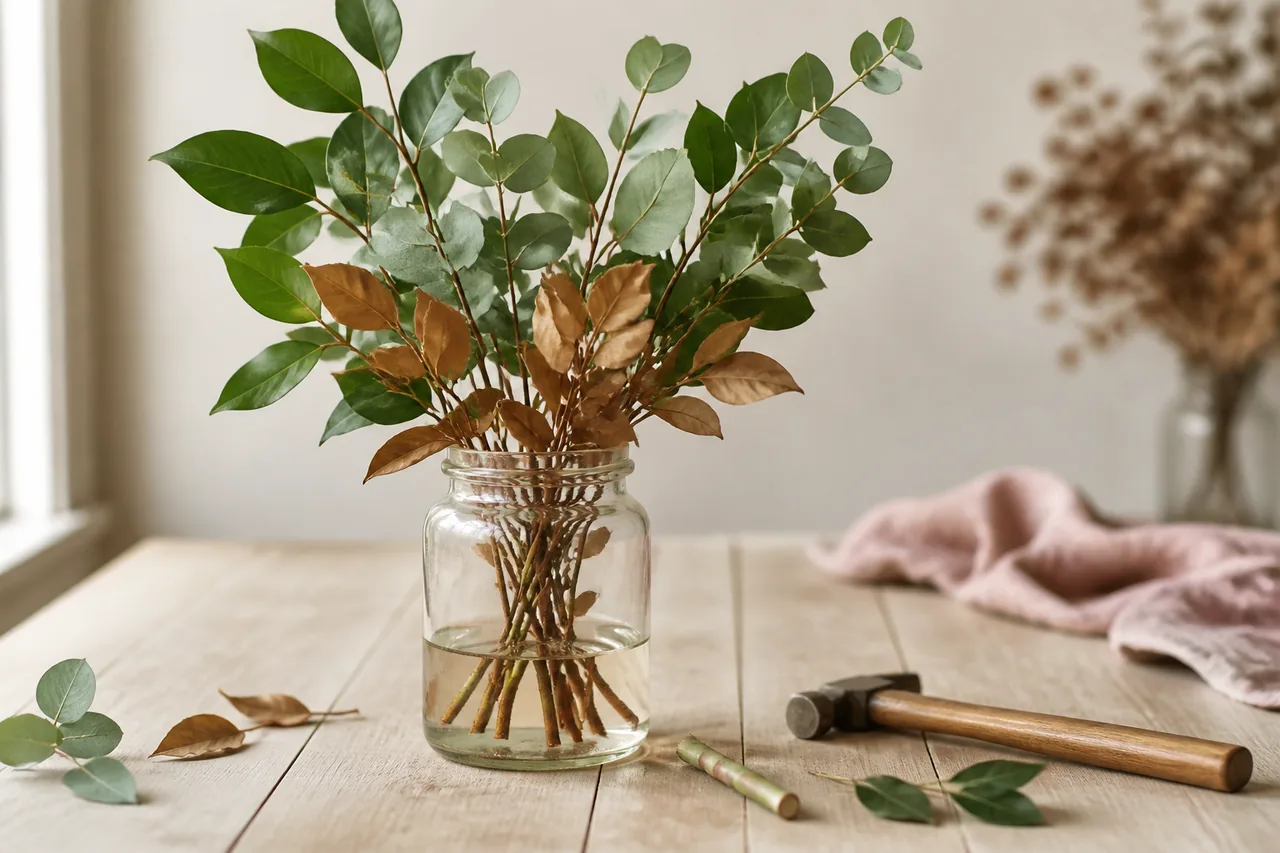
- Cut the stems short — Clemson caps mature branches at 18 inches, roughly 45 cm, including the bare stem in the jar.
- Crush the stem ends with a hammer, as Clemson instructs. Violent for a rose, but it opens the vessels so the solution can climb.
- Mix warm — 1:2 for mature material; the RHS uses hot water and equal parts glycerine.
- Stand the stems in about 6 inches (15 cm) of solution in a glass jar.
- Top it up. The step people skip. Clemson is explicit that more must replace what is taken up; run it dry and the process stalls.
- Wait and watch the colour climb. Done when the colour has completely changed and the foliage, in the RHS's phrase, "feels leathery".
How long does glycerin take?
Two to three weeks before all the foliage is done, says Clemson — the slowest of the four methods. The glycerin comes from a pharmacy; Clemson suggests technical grade, cheaper than laboratory grade and identical for this job.
How to Dry Roses: The Hanging Method
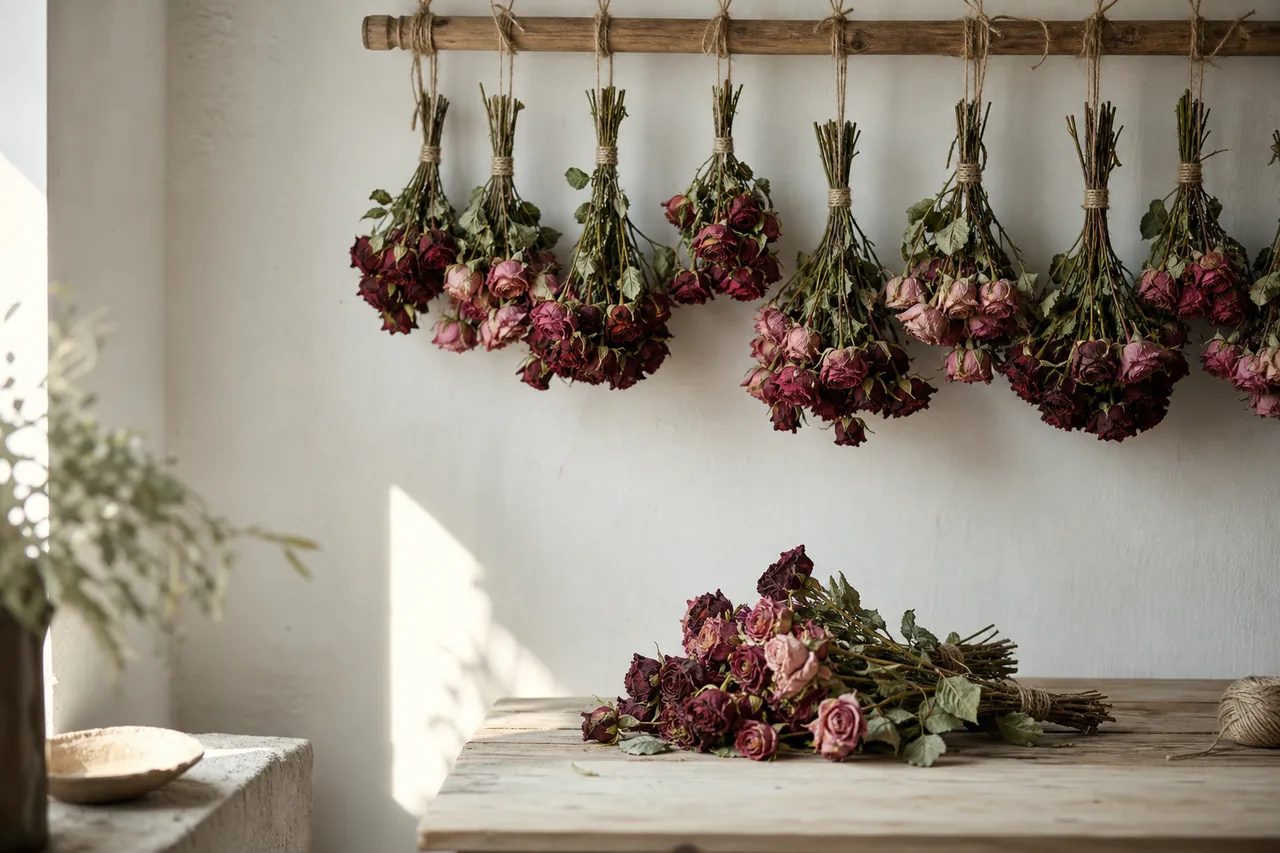
The oldest method, the cheapest, and what most people mean when they ask how to dry roses. It costs nothing but string and patience.
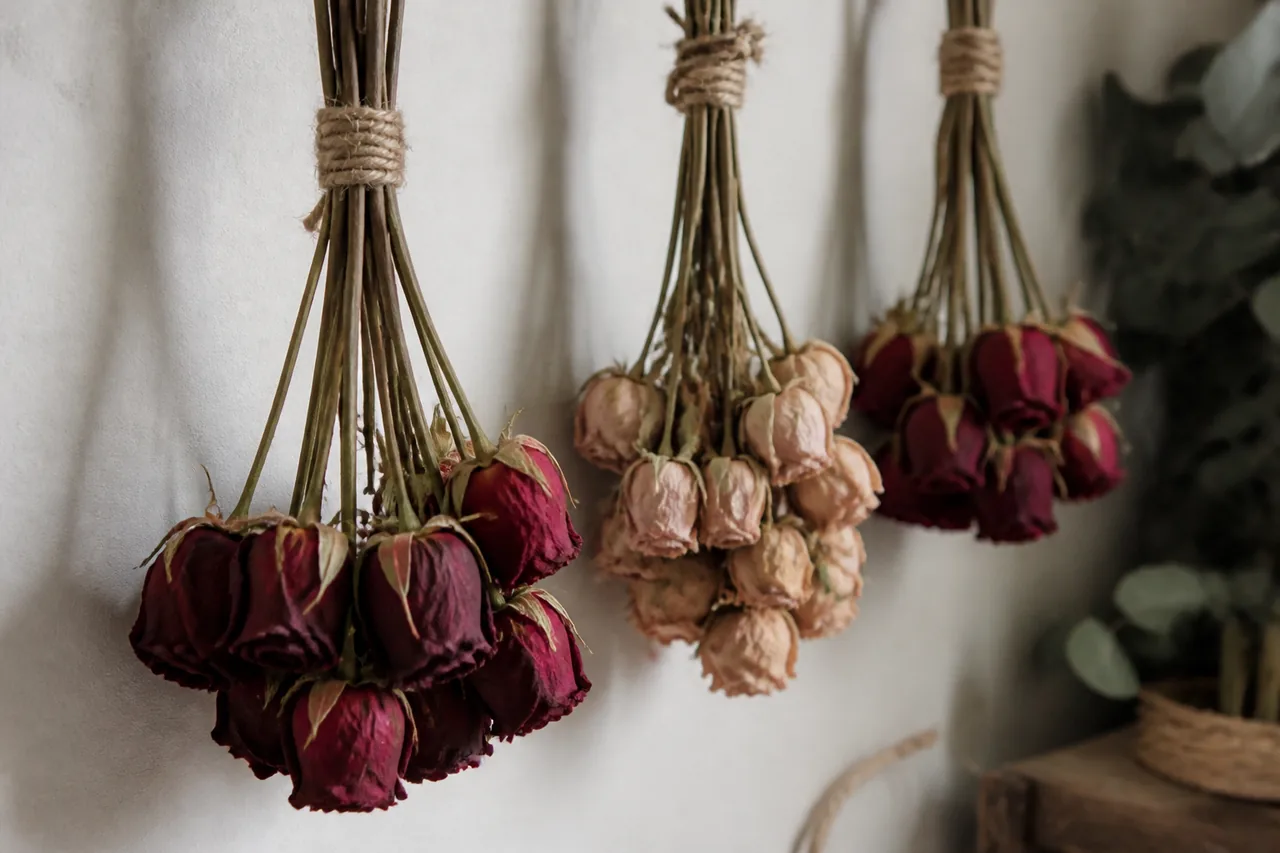
How do you dry roses? The four steps
- Cut them earlier than feels right. Clemson says flowers dried this way "should be cut just before being fully open". A fully blown rose drops its outer petals as it dries.
- Strip the leaves and bunch the stems. Small bunches, not one fat one — air has to move between the heads. The RHS says tie with a rubber band, which keeps its grip as stems shrink.
- Hang them upside down somewhere dark, dry and airy. Clemson specifies warm, dark and dry; the RHS asks for low light and good ventilation. Both insist on dark, and Clemson explains why: "The darkness helps preserve the flower color."
- Leave them for two to three weeks — longer, says the RHS, if the material holds a lot of moisture.
A Cape Town note: this wants dry, moving air, so a dry summer spell is far easier than a wet winter week. A spare room or passage cupboard left ajar beats a bathroom or kitchen every time.
What to expect, honestly
Air drying has the biggest gap between the photograph and the result. Clemson found air-dried flowers are "extremely stiff once dried", that roses and peonies "shrink somewhat", and on colour: "Blue and yellow flowers retain their colors when air dried, but pink flowers fade."
Plan around that last line. For a bunch that still reads as red in a year, start with deep colour — darker red roses dry far more convincingly than pale ones. Start with a bunch of pink roses and expect something soft, dusty and antique. A choice, rather than a surprise.
How to dry rose petals
For loose petals — confetti, a keepsake jar, potpourri — do not hang the whole flower. Pull the petals while the rose is fresh and lay them in a single layer, not touching, somewhere dark and airy. With far less bulk than a whole head they finish much faster, and turning them once or twice dries both sides evenly.
The bunch worth starting with
Deep reds and burgundies reward the effort most, and these come with plenty of stem to work with. For a first attempt, something under R300 is a sensible place to experiment. Drying costs you stems, though — whatever you hang up is not going back in the vase — so if you want the arrangement and the keepsake, a slightly fuller bunch gives you enough to spare a few without thinning what is left.


Silica Gel: The Method Made for Rose Blooms
If you take one thing from this guide, take this. Silica gel is the method both sources name for roses, and it gets closest to preserving a rose as a rose.
Clemson is direct about why: silica gel "is appropriate for quick-drying flowers and for drying flowers with closely packed petals such as roses". A rose head is exactly the shape air drying struggles with, because the inner petals stay damp long after the outer ones have gone. Burying the head in a desiccant pulls moisture from every petal at once, so it keeps its shape instead of shrivelling inwards. The RHS agrees, listing hellebores, peonies and roses together as flowers this method suits.
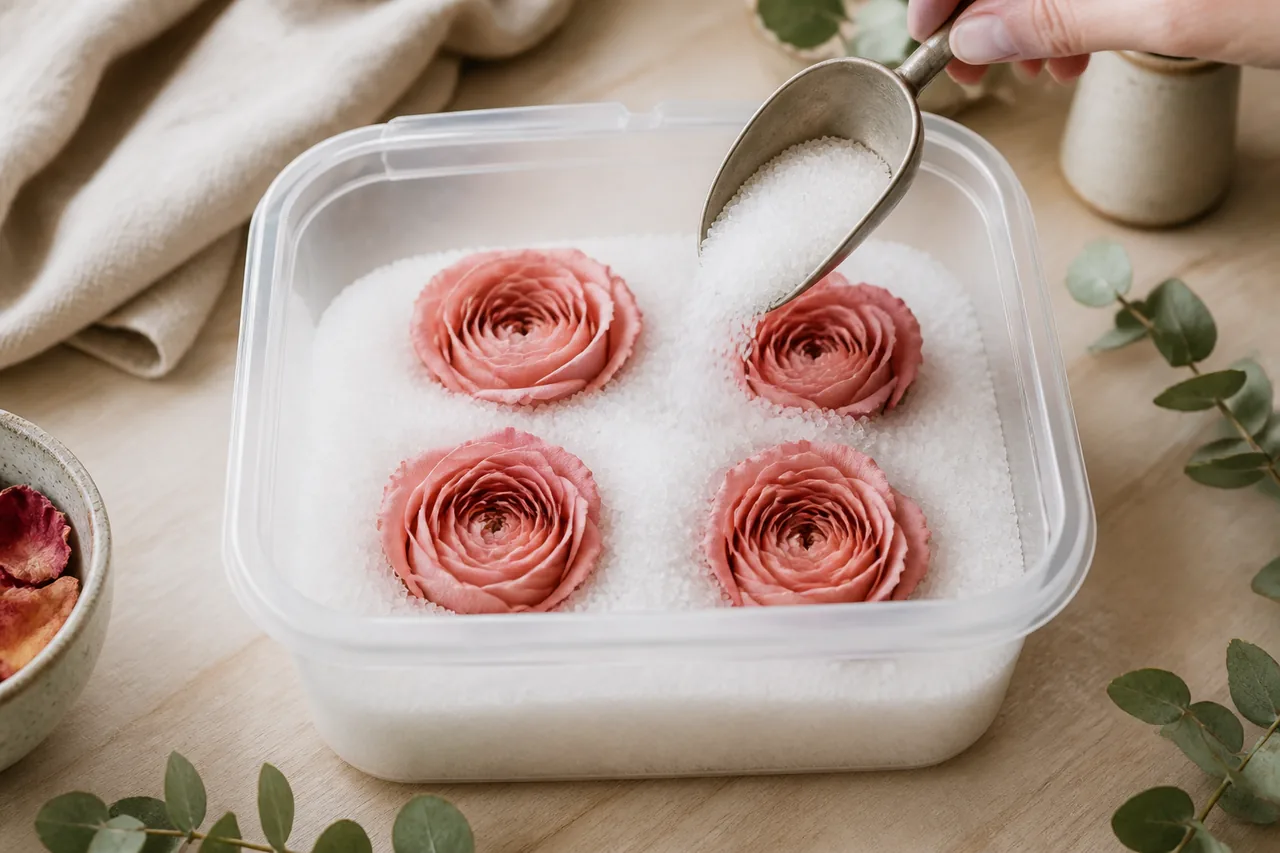
How to preserve a rose in silica gel
- Snip the heads off. The RHS method works on flower heads, not whole stems. Leave a short stub if you plan to wire them later.
- Lay a bed of gel in a plastic tub and sit the heads on it, face up.
- Trickle more gel around and between the petals until covered. Slowly is the whole skill; poured hard, the crystals crush the petals flat.
- Seal the container — Clemson notes an unsealed tub draws moisture from the room as well as from your roses.
- Check every couple of days, as the RHS advises. Clemson puts the full job at about a week.
The blue crystal question, where our two sources disagree
Clemson describes indicator gel neutrally: it "is blue when dry and light pink when it has absorbed water", a handy way to see whether it still works. The RHS takes the opposite line, telling you to "avoid gels with blue colouring, which is copper based", and to avoid plastic beads too. Plain white crystals dry just as well either way, and the RHS notes fine sand works as a slower, free substitute.
Reusing it, and the two small catches
Silica gel is expensive up front — both sources say so — but the RHS points out it is re-usable and long-lasting. Clemson says it can be oven-dried at about 150°C (300°F) and reused, and absorbs roughly 40 percent of its own weight in water before it is spent.
Two catches. Clemson warns commercial gel contains fine and coarse granules, and the coarse ones can leave "very small punctures of the petals", so sift out the big grains for anything delicate. And in a hurry there is a microwave variant: flowers supported in silica gel, roughly 300 watts, about two and a half minutes for half a pound. Wear gloves and a mask handling loose crystals either way.
Roses with the petal count to make it worth it
Tightly packed, many-petalled heads are what this method was described for, and pale varieties hold colour far better in gel than on a drying line.


Pressing Roses Flat
Most of us met pressing first, in a school project or the back of a dictionary. It is still the right answer whenever the finished thing will live behind glass.
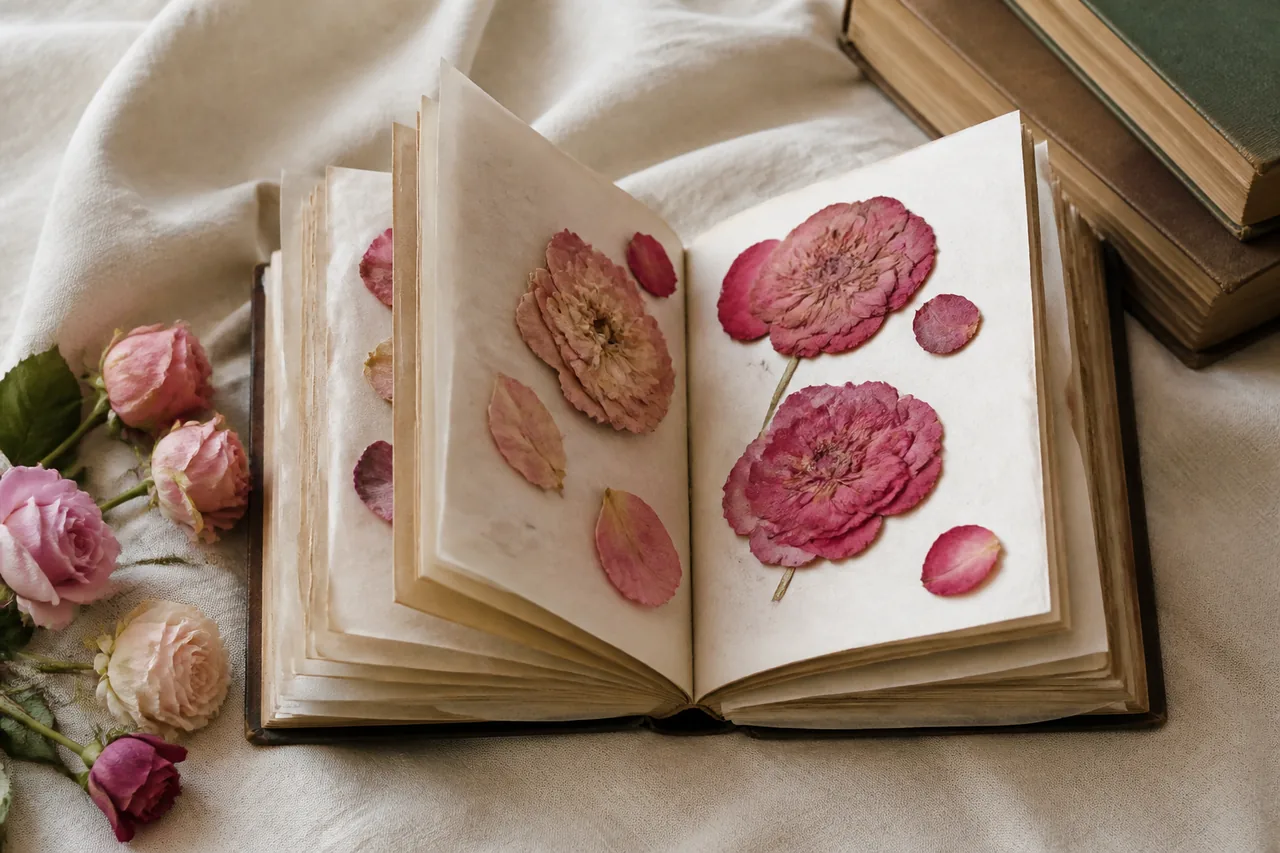
The method is as plain as it sounds. Clemson describes plant material "placed between the pages of a book, which is closed and weighted", and notes purpose-made plant presses give excellent results. Interleave with plain absorbent paper so print does not mark the petals, then weight the top.
Two things separate a good press from a brown smear. Flatten the rose before it goes in — a whole head is far too thick, so split it or press the petals separately. And change the paper after the first day or two, while the material is giving up most of its moisture.
The RHS puts the timing at a week: "The pressed flowers will be dry in a week and will keep their colours beautifully." Colour retention is pressing's real strength. Clemson notes violets, pansies, larkspur and ferns press particularly well, if you want something finer alongside the roses.
Which Method Should You Actually Use?
Four methods, four different jobs. The whole guide in one picture.
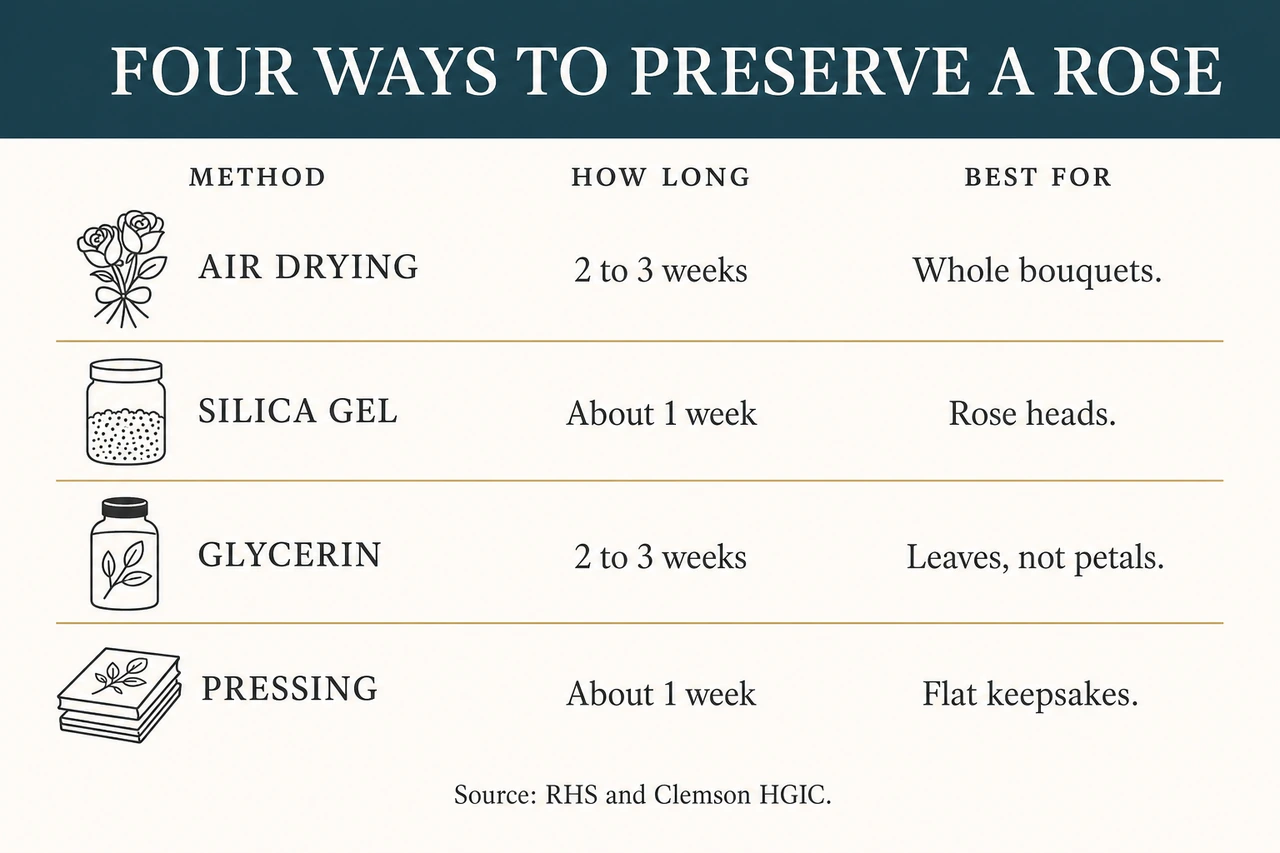
View this comparison as a table
| Method | How long | What it does to colour | Best for |
|---|---|---|---|
| Air drying | 2 to 3 weeks | Pinks fade; darkness helps | Whole bouquets kept as a bouquet |
| Silica gel | About a week | Best colour and shape retention | Rose heads and closely packed petals |
| Glycerin | 2 to 3 weeks | Turns the material golden brown | Foliage — leaves and woody stems |
| Pressing | About a week | Keeps colour well | Flat keepsakes, framed pieces |
A Cape Town footnote: the flowers that do this by themselves
There is a reason dried arrangements are part of the local visual language: our fynbos includes plants that arrive essentially pre-preserved. SANBI's PlantZAfrica entry for Syncarpha vestita, the Cape snow or white everlasting, records that "the dry flowerheads of S. vestita retain their shape and colour for many years, giving it the common name everlasting", and that the species is used in the dried-flower industry.
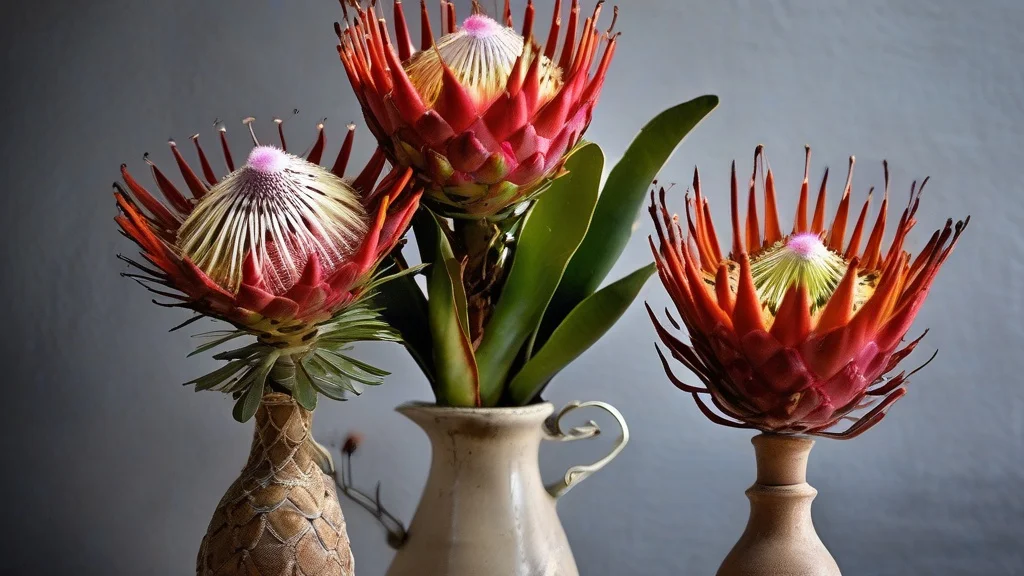
Proteas behave similarly — a king protea head hung to dry keeps its architecture in a way no rose can match. Mixing in proteas and fynbos gives a lasting arrangement a backbone that outlasts everything else in the vase. Our protea care guide covers handling them while fresh.


Preserving Roses: Your Questions Answered
Can you really preserve a rose with glycerin?
You can run a rose stem through the process, but both the RHS and Clemson describe glycerin as a method for foliage. The RHS calls it useful for box, beech and ferns; Clemson files it under foliage and describes the finished result as a leaf turned golden brown. Neither names roses. Both name roses under silica gel instead.
What is the glycerin to water ratio for preserving flowers?
It depends on how mature the material is. Clemson specifies 1 part glycerin to 2 parts water by volume, warmed, for mature leaves taken up through the stem, and 1:1 for younger leaves, submerged completely then washed. The RHS describes the method as hot water and glycerine in equal parts, so 1:1.
How long does it take to dry roses?
It depends on the method. Air drying takes 2 to 3 weeks according to the RHS. Silica gel is much faster — Clemson puts it at about a week in a sealed container. Pressing is quick too, with the RHS saying pressed flowers are dry in a week. Glycerin is slowest at 2 to 3 weeks.
How do you dry roses and keep their colour?
Darkness and speed. Clemson notes darkness helps preserve flower colour during air drying, which is why bunches go somewhere dark rather than a sunny window. Speed matters because the longer petals stay damp the more colour they lose, which is why silica gel beats air drying. Clemson also found blue and yellow flowers retain their colours when air dried, but pink flowers fade.
Do dried roses last forever?
No, but properly dried flowers last a very long time. SANBI notes the dry flowerheads of Syncarpha vestita, the Cape snow, retain their shape and colour for many years — which is how the everlasting family got its name. Dried roses are more fragile. Keep them out of direct sunlight and away from damp and a bunch will hold for years.
Can you preserve a rose that has already wilted?
Only up to a point. Every method preserves the flower roughly as you find it, so a rose already browning at the edges dries into a browned version of itself. Clemson's advice for air drying is to cut flowers just before they are fully open, which means starting earlier than most people think.
Start With Roses Worth Keeping
Every method here has the same first ingredient: a rose that was fresh when you started. Preservation locks in the flower's condition, so a bouquet that spent a week in transit dries into exactly that. Worth reading how to get ten to fourteen days out of a bouquet first.
The practical move: buy slightly larger than you need, pull three or four stems on day two while they are at their best, and dry those while the rest carry on in the vase. You get the arrangement and the keepsake. Browse the full rose collection, or the mixed rose bouquets for colours to experiment with. For an occasion worth marking twice over, our romantic bouquets are the ones people most often come back to preserve.
From the florists
Send the story, not just the flowers.
Cape Town's freshest blooms — same-day delivery on weekday orders before noon, hand-arranged by florists who actually know the difference.
Shop anniversary flowersEditor's picks
Featured arrangements


Frequently asked
Quick answers
Which bouquet should I buy if I want to dry it afterwards?
Pick deep colour and plenty of stems. Dark reds and burgundies hold colour through air drying far better than pale pinks, and a fuller bouquet lets you pull three or four stems to dry while the rest stay in the vase. Long stems also give you something to tie and hang.
How soon after delivery should I start drying?
Sooner than most people do. Preservation locks in whatever condition the flower is in, so day one or two is ideal, while the blooms are just short of fully open. Waiting until the bouquet is visibly past its best gives you a preserved version of a tired flower.
Do you sell dried or preserved flowers?
Our range is fresh flowers, delivered across Cape Town and the Western Cape. Drying them afterwards is something you do at home. For an arrangement that lasts a long time in its own right, proteas and other fynbos are the ones to look at.
Where do I buy silica gel in South Africa?
Craft shops and hobby suppliers are the usual route, and larger pharmacies sometimes stock it. Both sources note it is expensive at first but re-usable, so it works out cheaper over several bouquets. The RHS mentions fine sand as a slower substitute.